
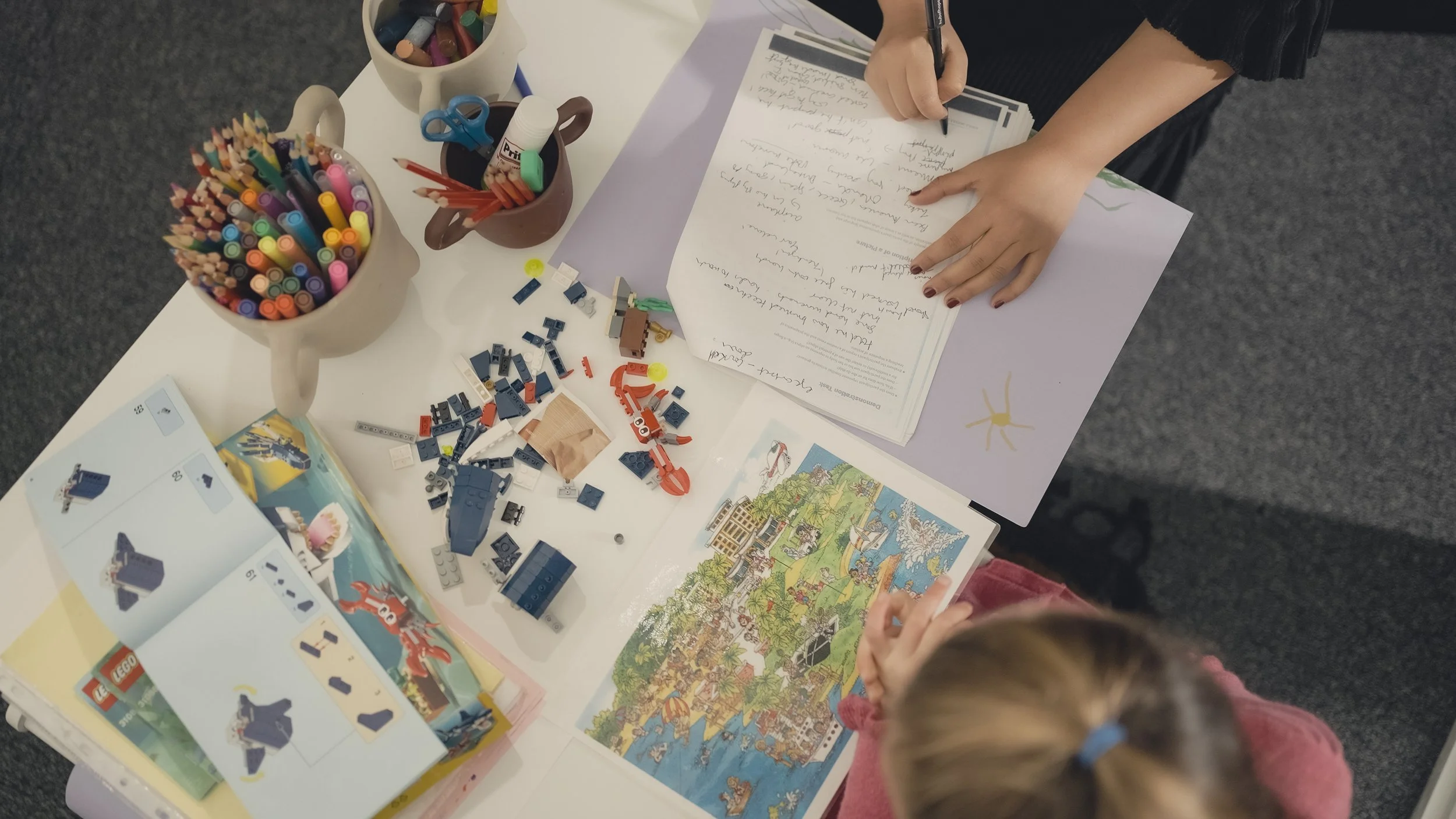
Initial consultation
A first conversation about what you have noticed
Parents often consider an assessment because they have noticed traits in their child that may be consistent with autism or ADHD, or because their child’s school has suggested that an assessment could be useful.
The initial consultation gives our psychologist an opportunity to understand what has brought your family to assessment and decide whether a full neurodevelopmental assessment would be beneficial for your child.

What you have noticed
- Traits that seem consistent with autism or ADHD.
- Questions about how your child experiences or manages everyday life.
- A wish to understand whether a formal assessment may be helpful.
What school may have raised
- School may have noticed traits that prompted questions about autism or ADHD.
- A teacher or school may have suggested that an assessment could be useful.
- This forms part of the context for why your family is seeking a consultation.
Initial consultation
- Discuss what has led you to consider an assessment.
- Give the psychologist an initial picture of your child’s needs and circumstances.
- Determine whether a full neurodevelopmental assessment would be beneficial.
Paperwork for the assessment
Under 7s
ADHD assessment
- Child Background Information form
- Mood and Feelings Questionnaire (M+F) — child version
- Mood and Feelings Questionnaire (M+F) — parent version
- SNAP-IV (Swanson, Nolan and Pelham Rating Scale)
- School form
Autism assessment
- Child Background Information form
- M+F — child and parent versions
- Social Communication Questionnaire (SCQ) — lifetime
- Social Communication Questionnaire (SCQ) — current
- School form
Autism + ADHD (combined)
- Child Background Information form
- M+F — child and parent versions
- SNAP-IV
- SCQ — lifetime and current
- School form
8 and over
ADHD assessment
- Child Background Information form
- RCADS (Revised Children's Anxiety and Depression Scale) — child version, 8+
- RCADS — parent version, 8+
- SNAP-IV
- School form
Autism assessment
- Child Background Information form
- RCADS — child and parent versions, 8+
- SCQ — lifetime
- SCQ — current
- School form
Autism + ADHD (combined)
- Child Background Information form
- RCADS — child and parent versions, 8+
- SNAP-IV
- SCQ — lifetime and current
- School form
Parent or carer interview
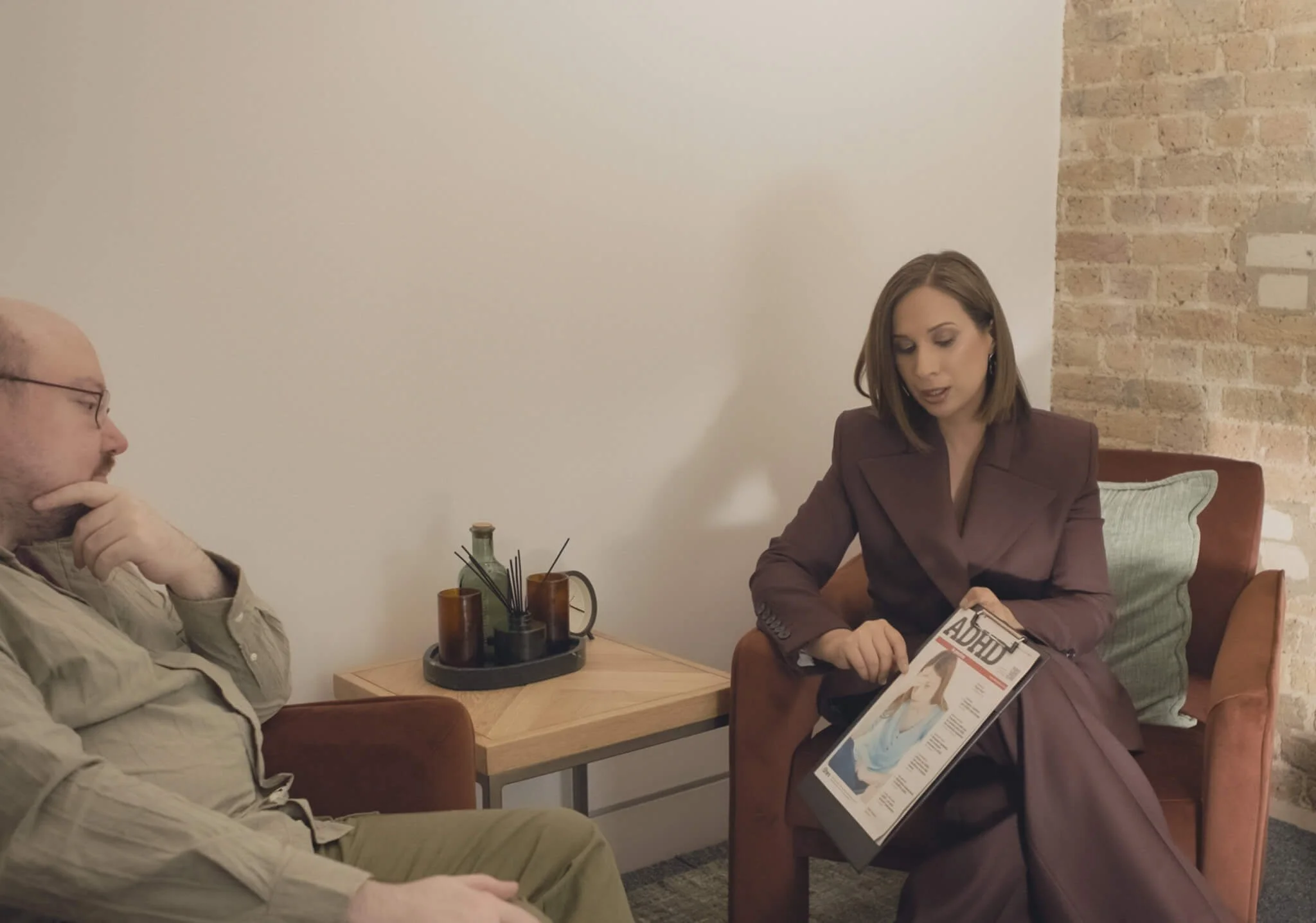
Understanding development through the people who know your child best
A parent or carer interview helps us build a detailed developmental picture of your child from their earliest years to the present day. We explore the milestones, experiences and patterns that may help explain the concerns that have led to assessment.
Rather than looking at one behaviour or one point in time, we consider how your child has developed across home, relationships, communication, education and significant life experiences.
A conversation that moves through time
The conversation moves chronologically through your child’s development, from pregnancy and birth through early milestones, communication, school and significant events. The emphasis adapts to whether we are assessing autism, ADHD or both.
-
01 Pregnancy & birth
-
02 Bonding
-
03 Walking
-
04 Talking
-
05 Toileting
-
06 School
-
07 Significant events
Home and school are considered together
A developmental history provides the family context. Later stages add the young person’s own assessment and a teacher perspective so that the overall picture is not based on one setting alone.
Relevant history also matters
Where relevant, the conversation can also consider significant experiences and family history as part of the broader clinical picture.
Child or young person assessment
Understanding the young person, not just the referral
A full assessment includes meeting the child or young person themselves. The format is structured around what is being assessed while allowing the psychologist to understand how the young person communicates, interacts and describes their own experiences.
The assessment is part of a broader clinical picture. Information from the young person is considered alongside developmental history and the school perspective rather than in isolation.

Structured autism assessment
Where autism is being assessed, the young person may complete a structured observational assessment such as ADOS-2, considered alongside developmental information and DSM-5 diagnostic criteria.
What this contributes
- Structured information about social communication and interaction.
- Observations gathered during planned activities or conversation.
- Evidence to be considered alongside the rest of the assessment.
Structured ADHD assessment
Where ADHD is being assessed, the clinical interview considers patterns of attention and/or hyperactivity–impulsivity against DSM-5 diagnostic criteria and in the context of everyday functioning.
What this contributes
- A structured exploration of relevant ADHD characteristics.
- The young person’s own account where appropriate.
- Information that can be compared with home and school perspectives.
Autism + ADHD assessment
Where both autism and ADHD are being explored, we use both approaches and consider the resulting evidence together as one integrated clinical picture.
School perspective

Adding the view from school
Teacher
A full child or teenager assessment includes information from a teacher who knows the young person in their everyday learning environment. This adds a second setting to the assessment and helps us understand how they present and function outside the home.
Adds information from a setting that is different from home.
Helps build a broader picture of the young person’s day-to-day presentation.
Can be considered alongside the family interview and the young person’s assessment.
In-person observation
For primary-school aged children, an Affiniti+ Psychologist visits the school to observe them directly in the classroom, playground and other everyday settings, alongside the teacher interview and school form.
Stage 05 of 05
Report

Bringing everything together
A detailed report of the assessment and what it means
We bring together information from the child or young person, their parent or carer, their teacher and the assessment itself into one detailed clinical report.
Affiniti+ gives clients the opportunity to read and comment on the report before it is finalised, so the finished document can accurately represent the assessment and its recommendations.
Assessment report
What the report brings together
01Assessment findingsClinical summary
- A clear summary of the assessment and the evidence considered.
- The diagnostic conclusions reached through the assessment.
- An explanation of the young person’s profile in context.
02Next stepsRecommendations
- Recommendations designed to help the young person moving forward.
- Information that can support conversations with family, school and relevant professionals.
- Supporting assessment information and appendices where appropriate.
03Supporting evidenceAppendices
- Parental interview
- Family interview, where relevant
- School summary (school form, teacher interview and observation)
- Mental health measures (M+F or RCADS, as applicable)
- DSM-5 ADHD criteria, where applicable
- ADOS-2, where applicable
- DSM-5 ASD criteria, where applicable
Sharing with others involved in your child’s care
Understanding
The report gives parents or carers a detailed written account of the assessment findings and recommendations.
Support planning
The findings can be shared with school so that relevant recommendations and support needs can be understood.
Continuity
Affiniti+ recommends sharing the report with the GP and other relevant individuals where this helps the child access appropriate support.